

-
Leave a comment:
-
Even if you think he's being too optimistic, he is still a great help to people who come here to learn. He's brought up some great topics with sources to actually back them upLeave a comment:
-
interesting study compares embryonic stem cells with iPS cells to see if they are equivalent:

the result is: yes, they are equivalent. only 50 of 200.000 genes had slightly different expressed levels, which is considered tolerable.
this even more paves the way for future iPS applications. more and more points to the fact that iPS is one of the biggest discoveries in mankind. soon we will be able to cure and replicate everything with that breakthrough iPS technology.Leave a comment:
-
I was going to post that about a week ago when I read it, cause I wanted to see if you think it would help dr lauster.I Wanted to email it to dr lauster Also lacazette check this out
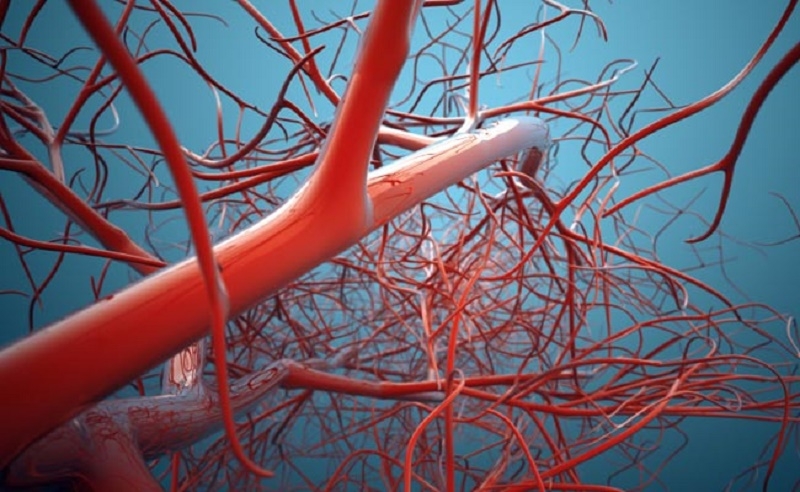
The creative breakthrough in the 3D blood vessel bio-printing means we have mastered the stem cell-based 3D bio-printing technology,” reports*CCTV America.
Researchers demonstrated how the printer could create a 4 inch-long blood vessel in just 2 minutes using its two print heads. "We create special environmental and biological conditions for our bio-bricks, making it possible to differentiate the cells as we need. So we can print each layer with a different cell," said Professor Kang Yu Jian, who led the research team
I still have my hopes for dr lauster since I had a few hair transplants and idk if these other treatments will work where my grafts were placed.Leave a comment:
-
a proof of concept in 2016 would be huge using these stem cells alone... doubtful on a clinical trial so soon thoughLeave a comment:
-
Big progress are coming out day after day, and few days ago the 2 most powerful domains in regenerative medecine are now meeting eachother : they are now able to bioprint iPS cells!
( safety, time consuming, cheapness, easiness, make large amounts of, etc,etc the meeting of these two worlds will be a huge help in every areas needed for commercialisation be possible one day)
21oct

-------
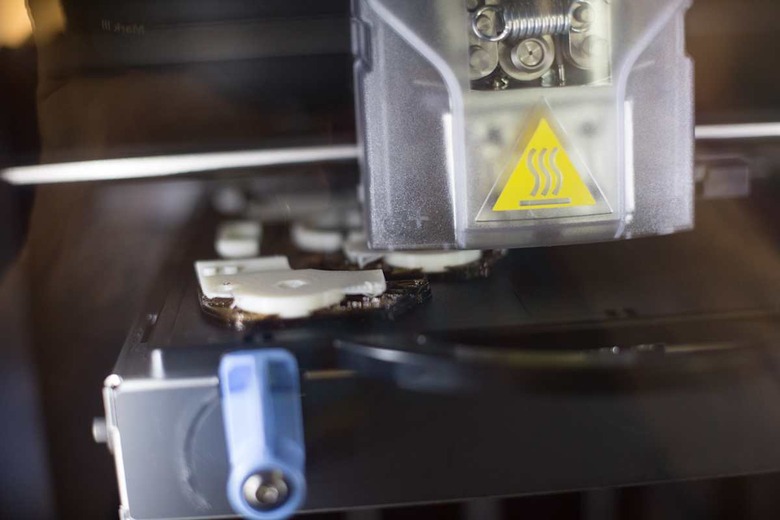
In a new breakthrough for bioengineered 3D printing, a team from the Scottish-based Heriot-Watt University’s School of Physical Sciences and Engineering has constructed a 3D printer that is able to print with delicate stem cell cultures
The printer is engineered to print what the team calls ‘induced pluripotent stem’ (iPS) cells, which are delicate cells derived from the particular donor.
“This study is the first to demonstrate that human induced pluripotent stem cells, that is stem cells derived from the adult patient’s own cells, can be bioprinted without adversely affecting their biological functions; that our 3D printing process is gentle enough to do this,” said Dr. Shu
Dr. Shu is describing a system that is able to bioprint these sensitive cell cultures without destroying their biological function to create different cell types.
“The ability to bioprint stem cells while either maintaining their pluripotency, their ability to develop into all types of cells in the body, or indeed directing their differentiation into specific cell types, will pave the way for producing organoids, or tissues on demand, from patient specific cells,” Dr. Shu added.
------
imagine,guys like Terskikh had to take adult cells from a biopsie, make them pluripotent, and then make these iPSCs become DPs cells , all that manually . It's commercially not possible for a treatment when you need many many DPs cells. But now the entire process could be done via the bioprinter
Not only transform the adult cells into iPSCs, but also then directing those ones into the type of cells needed
Complete safety reprogramming is currently being solved, now that mechanical automation via bioprinting will enter the game , viability of clinical application of a treatment is becoming more and more possible and concrete day after day
I still maintain that we will see at least one of them enter a phase1 during 2016 (or at least a proof of concept on a human head) ( terskikh, takashi tsuji, regience, ohyama, amagai, CHA korea, P&G/Singapore, chineses ones, or another using iPSC technology ) ( I could add also Cristiano as I see she is presenting recently a " functional complex skin derived from iPSC" )Leave a comment:
-
Hey jay yeah that's really huge! it's crazy the solutions we will have in 20/30 years when a lot of us will be dealing with serious diseases, it's gonna be insane! BUT we need hair ASAP to enjoy this fukcing life now! heheLeave a comment:
-
Lacazette have you read this - http://news.xinhuanet.com/english/20..._134748306.htm
Could be big news for hair because making blood vessels is needed if you want large scale skin grafts ect and better models.Leave a comment:
-
A quote before the summer from S&B and european institute researchers:
"In order to obtain cells suitable for clinical application, transgene-free iPSCs need to be generated to avoid transgene reactivation, altered gene expression and misguided differentiation. Moreover, a highly efficient and inexpensive reprogramming method is necessary to derive sufficient iPSCs for therapeutic purposes. "
http://www.jove.com/video/52885/gene...en-buffy-coats
-Protocols for transgene-free iPSCs are now reality and being sell by leading companies in this domain
-And the second problem will soon be something of the past,
with things like the Automation of iPS cell lines production by the NYSCF robot we already talked here (http://stemcellassays.com/2015/10/ips-automation/)
or with this :
18sept2015
University of Minnesota Medical School researchers have developed a new strategy to improve the development of induced pluripotent stem cells (iPS).
Currently, iPS cells are created by introducing four defined genes to an adult cell. The genes reprogram the adult cell into a stem cell, which can differentiate into many different types of the cells in the body. Typically, the four genes introduced are Oct4, Sox2, Klf4 and c-Myc, a combination known as OSKM.
The U of M researchers found that by fusing two proteins – a master stem cell regulator (Oct4) and a fragment of a muscle cell inducer (MyoD) – they succeeded in “powering up” the stem cell regulator, which can dramatically improve the efficiency and purity of reprogrammed iPS cells.
“Our team discovered that by fusing a fragment of the powerful protein MyoD to Oct4 we could create a ‘super gene’ which would improve the iPS reprogramming process,” said senior author Dr. Nobuaki Kikyo, Stem Cell Institute researcher and University of Minnesota Medical School associate professor. “The result is what we termed M3O, or ‘super Oct4’ – a gene that improves the creation of iPS cells in a number of ways. In the process we shed new light on the mechanism of making iPS cells.”
The challenge with the previous method – OSKM – has been that very few cells actually become iPS cells during reprogramming. In fact, the rates currently stand at about 0.1 percent. Another issue has been tumor development. Because some of the reprogramming genes introduced are oncogenes, the risk of developing tumors grows.
The research, led by Kikyo and Dr. Hiroyuki Hirai, both from University of Minnesota Medical School and Stem Cell Institute, led to a new gene model that minimizes such complications while amplifying the benefits of the process.
According to Kikyo, the new gene model – called M3O-SKM – improves iPS development by:
Increasing efficiency. The efficiency of making mouse and human iPS cells was increased over 50-fold compared with the standard OSKM combination.
Increasing purity. The purity of the iPS cells was much higher with the M3O-SKM gene introduction (98% of the colonies) compared with OSKM (5%).
Facilitating the reprogramming. iPS cell colonies appeared in around five days with M3O-SKM, in contrast to around two weeks with OSKM.
Decreasing the potential for tumor formation. M3O achieved high efficiency of making iPS cells without c-Myc, an oncogene that can potentially lead to tumor formation.
In addition, human iPS cells usually require co-culture with feeder cells typically prepared from mouse cells, obviously creating a problem when the cells are destined for human transplantation.[COLOR="red"] The M3O model did not require such feeder cells, greatly simplifying the process.
Future Impact
According to senior author Kikyo, this new strategy will dramatically speed up the process of making patient-specific iPS cells, which makes clinical applications via transplantation of the cells more feasible to treat many diseases incurable otherwise."""
terskikh, tsuji, ohyama, Fujiwara and others need these efficient iPSC reprogramming progresses to have a chance to test their technique on human.
But what is good is that these tools are needed by any researchers/companies in the world for ANY diseases potentially treated with iPSCs, that's why it's going fast til this summer
According to researchers it is the hot topic of the moment in regenerative medecine as a safe and efficient iPSCs reprog protocol will open doors to clinical applications
And as you see above they are finding great things.
In the same articile they talk also about a new area: direct reprogramming !!
Many researchers are also examining how to reprogram one cell type into another without going through iPS cells; for instance, coaxing skin cells into becoming neurons or pancreas cells by introducing several genes.
The approach, called direct reprogramming, is thought to be the next generation approach beyond iPS cell technology.
The U of M approach – fusing a powerful protein fragment to other host proteins – can be widely applied to the direct reprogramming approach as well
We could maybe soon ear about adult skin cells that are directly reprogrammed in DPs cells without the iPSCs transitionLeave a comment:
-
I think what Foofighters is trying to say is that with all these new papers you've been sharing, the real possible cure is 10-15 years away with these current findings. ( I think...and 10-15 imo is fairly highly optimistic)..Leave a comment:
-
still few ipsc things
-21 sept 2015 New Method for Testing Induced Pluripotent Stem Cells Differentiation Potential Could Lead to Safer and More Potent Treatments
http://www.streetinsider.com/Press+R.../10906066.html
During recent collaboration, two companies, Atlas Regeneration and Insilico Medicine, demonstrated the close resemblance of iPSCs with ESCs at the pathway level, and provided examples of how pathway activity analysis can be applied to identify iPSC line abnormalities or to predict in vitro differentiation potential. The results indicate that pathway activation profiling is a promising strategy for evaluating the safety and potency of iPSC lines in translational medicine applications allowing scientists to test differentiation abilities of many iPSC lines in silico while saving valuable time for patients waiting for treatment.
"Regeneration Intelligence is unique among pathway analysis platforms. Using our algorithm along with proprietary pathway database, we established for the first time pathway activation profiles of iPS.
Anthony Atala, MD, CEO of Atlas Regeneration said, "Our Regeneration Intelligence platform has been used in many iPSC lines and is helping stem cells biologist to improve and speed up decision-making. Unfortunately, the entire process of verification and validation of differentiation abilities using in vitro differentiation assays typically takes 12 weeks and time is critical for definitive treatment, especially in urgent cases. With the help of Regeneration Intelligence, we may be able to significantly reduce the time and cost of the process."
-Bromodeoxyuridine promotes full-chemical induction of mouse pluripotent stem cells
http://www.nature.com/cr/journal/v25...cr201596a.html
Direct reprogramming of somatic cells into induced pluripotent stem cells (iPSCs) with transcription factors (e.g., Oct4 (O), Sox2 (S), Klf4 (K), and c-Myc (M)) greatly expands our understanding of cell fate control. iPSCs resemble embryonic stem cells (ESCs) but without immune rejection and ethic issues, and are therefore considered as a promising source for cell replacement therapy.
However, iPSC applications are hindered by safety concerns about the possible genetic alterations caused by the use of exogenous pluripotency-associated factors. Many efforts have been taken to make iPSCs more amendable in clinical applications by using non-integrating gene delivery approaches2, or cell membrane-permeable proteins3,4 to induce the reprogramming.
Small-molecule compounds have also been found to be extremely useful in facilitating iPSC generation and can replace several reprogramming factors5. Several combinations of small-molecule compounds have been reported to allow iPSC generation with only Oct46,7. However, complete chemical-mediated reprogramming of somatic cells into the pluripotent state has been proved to be extremely difficult.
Here we report that the commonly used biological reagent, bromodeoxyuridine (BrdU), is able to enhance Yamanaka factor-mediated reprogramming. More interestingly, BrdU can replace Oct4, the most critical factor in iPSC generation. Further studies demonstrate that BrdU promotes full-chemical induction of mouse iPSCs using several chemical ****tails, with the minimal combination being BrdU, CHIR99021, Repsox, and Forskolin. These iPSCs resemble ESCs in terms of their gene expression, epigenetic status, in vivo differentiation potentials and the ability to generate chimera
In summary, we demonstrate that BrdU can replace Oct4, the most critical factor in iPSC generation, and promotes full-chemical induction of mouse iPSCs with the minimal combination being BrdU, CHIR99021, Repsox and Forskolin. Since BrdU has already been used in patients12, this combination may lay a foundation for full-chemical induction of human iPSCs and may eventually provide a safer strategy to generate clinically applicable iPSCs.
-Enhanced mRNA reprogramming by Reprocell

The Stemgent mRNA Reprogramming Kit is the fastest, safest, and most efficient method for generating integration-free, virus-free, clinically relevant human iPS cells.
The total time needed to generate a characterized iPS cell line using virus-based systems can take up to 25 weeks, whereas the Stemgent mRNA Reprogramming System generates virus-free, integration-free iPS cell lines in less than 2 weeks. This system enables the generation of fully characterized and banked iPS cell lines ready to use in as little as 9 weeks
The Stemgent mRNA Reprogramming System provides efficiencies greater than 1% as compared to other methods, which yield reprogramming efficiencies varying from 0.00001 to 0.01%. In addition to increased yield of colonies and fast reprogramming kinetics, mRNA reprogramming does not require laborious multi-step passaging or screening for viral or genomic integration once the new colonies are derived.
The mRNA Reprogramming System eliminates virus bio-containment and safety issues, and carries no risk for insertional mutagenesis, an inherent concern with DNA-based reprogramming methods.
-the Top 5 iPS Cell Influencers : https://www.bioinformant.com/do-you-...ers-right-now/Leave a comment:
-
Leave a comment:
-
Last publish from the inventor of iPSCs, confirming the recent progress on reprogramming safety and efficiency
2015 Oct 6
Practical Integration-Free Episomal Methods for Generating Human Induced Pluripotent Stem Cells.
The advent of induced pluripotent stem (iPS) cell technology has revolutionized biomedicine and basic research by yielding cells with embryonic stem (ES) cell-like properties. The use of iPS-derived cells for cell-based therapies and modeling of human disease holds great potential. While the initial description of iPS cells involved overexpression of four transcription factors via viral vectors that integrated within genomic DNA, advances in recent years by our group and others have led to safer and higher quality iPS cells with greater efficiency. Here, we describe commonly practiced methods for non-integrating induced pluripotent stem cell generation using nucleofection of episomal reprogramming plasmids. These methods are adapted from recent studies that demonstrate increased hiPS cell reprogramming efficacy with the application of three powerful episomal hiPS cell reprogramming factor vectors and the inclusion of an accessory vector expressing EBNA1
Leave a comment:
-
So does it took here 10/15 years between discovery and practical use? no, the majority of papers here are achievements for technology/knowledge improvement to make things cheaper, faster, easier, safer on the iPSCs treatments area. When these kind of breaktroughs comes out it's a matter of months or even days for other researchers to use it or replicate the protocol
we don't talk here about a treatment that has to be proven as you mentioned
Come on dude are you even reading what he said?Leave a comment:


Leave a comment: